What’s Changed for Construction Since the Autumn Budget?
At A Glance:
- Construction activity remains slow in early 2026.
- Housebuilding is still the weakest area of the sector.
- Planning reforms are ongoing, with limited short-term impact.
- Construction vacancies have fallen since last year.
- Skills shortages remain a long-term challenge.
- The National Living Wage rises in April 2026.
- Inflation has eased, and interest rates are lower.
Looking for a specialist construction recruitment partner?
With decades of experience and expertise across the construction sector, ITS can help you build the right team to make the most of the opportunities in UK construction. Get in touch to find out more.
A Closer Look
The 2025 Autumn Budget arrived with a promise for construction: stability, investment, and a clearer path to growth. Back then, the big question was whether the announcements would actually turn into work, confidence and delivery.
So, four months on from the Autumn Budget, what have we actually learned?
The Immediate Construction Sector Bounce Hasn’t Really Happened
If the Budget was meant to deliver a quick lift in activity, that has not really shown up in the live construction data yet.
ONS data showed monthly construction output fell by 1.3% in November 2025, after a 1.2% fall in October. In the build-up to November, total construction output was down 1.1%, which ONS said was the biggest three-month fall since March 2023.
That construction industry weakness has carried into 2026.
The S&P Global UK Construction PMI came in at 46.4 in January 2026 and then fell back to 44.5 in February. Anything below 50 signals contraction, so while January looked like a slight stabilisation after a rough end to 2025, February showed the sector was still shrinking. Residential work remained the weakest area.
So, the Autumn Budget may have improved sentiment in some parts of the market, but it did not trigger an immediate turnaround in workload.
Housing Still Looks Like the Pressure Point
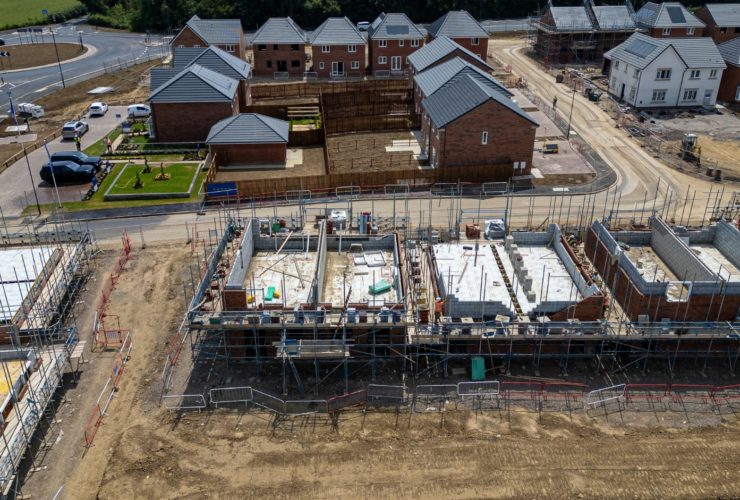
Housing was already carrying a lot of the sector’s anxiety last autumn, and that still looks true now.
The OBR’s March 2026 outlook shows that net additions to the UK housing stock are expected to fall to 215,000 in 2026-27 before rising later in the forecast period, reaching 305,000 in 2029-30 as planning reforms feed through. That tells its own story. The government still expects planning reform to lift delivery over time, but the near-term dip is baked in.
There are still reasons not to be too negative.
The OBR continues to expect residential investment growth to strengthen later on, and the government confirmed in January 2026 that £2.5 billion of low-interest loans will be made available over four years to support social and affordable housing delivery.
But that is still about pipeline building and future delivery. It does not change the fact that, right now, housing output remains under strain.

The Planning Story Is Still About Promise Rather Than Proof
Back in autumn, planning reform was one of the biggest reasons for optimism. That has not changed, but it is still largely a story about what should happen rather than what already has.
The OBR is still tying future housing and residential investment growth to planning reform, expecting both housing additions and residential investment to rise later in the decade as those reforms take effect.
So, four months on, the planning takeaway is pretty straightforward: the sector has more clarity on intent, but not yet enough proof on delivery.
Labour Pressure Has Changed Shape, But It Hasn’t Gone Away
One of the more interesting things we can see now is that labour pressure looks a bit different than it did before.
ONS vacancy data for November 2025 to January 2026 showed total UK vacancies were down 9.2% year on year, but construction saw one of the steepest falls of any sector, down 32.4%. That suggests recruitment demand has cooled from its previous highs.
But that does not mean construction’s skills challenges have disappeared.
CITB has said the industry will need more than 47,000 extra workers a year through to 2029 to meet demand, and its February 2026 Industry Picture again pointed to the scale of the long-running skills gap.
So what looks like a softer hiring market in the short term still sits alongside a deeper structural shortage.

The Minimum Wage Rise Matters, But in an Unexpected Way
The next big cost change hanging over employers is the April 2026 rise in minimum wage rates.
From 1 April 2026, the National Living Wage for workers aged 21 and over rises to £12.71, up 4.1%. The 18 to 20 rate goes to £10.85, while the apprentice rate rises to £8.00.
That will matter to parts of the labour market linked to site support, entry-level roles and supply chains. But the wider macro view is a bit calmer than some may have expected.
In its February 2026 Monetary Policy Report, the Bank of England said the April 2026 National Living Wage increase is expected to have a negligible impact on aggregate wage growth, especially compared with the bigger 2025 increase. It also said lower National Living Wage pressure should reduce labour cost growth this year.
That does not mean the change is irrelevant to construction firms; it just means it may not be the sector-wide cost shock some feared.
Looking for an Expert Construction Recruitment Partner to Manage Industry Changes?
At ITS, we can help you stay ahead of demand with reliable trades, labour, and professional staff across housing, civils, infrastructure, and commercial builds. With shifts in public spending, skills funding, and major project commitments, having the right people in place gives every project the best chance of success.
If you want to keep your site moving and make the most of the UK Budget’s construction sector impact, then take a look at how we can help your business, or get in touch to find out more.
FAQ
Has the Autumn Budget improved things for construction yet?
Not in any dramatic short-term sense. Early 2026 data still shows contracting activity, especially in housing, although the medium-term outlook is more positive.
Is housebuilding in a better place now than it was in autumn 2025?
Not really in the short term. Housing remains the weakest part of the live construction data, even though longer-term forecasts still expect planning reform to help.
Will the April 2026 minimum wage rise hit construction hard?
It will affect payroll planning, but the Bank of England expects it to have only a negligible impact on aggregate wage growth across the economy.
Are skills shortages still a problem?
Yes. Vacancy levels have fallen, but industry forecasts still point to a major long-term labour gap.
Has planning reform started to make a difference yet?
It is shaping the forecast, but the strongest effects are still expected later rather than now.